Hire a Next.js Developer.
Next.js development covers building and maintaining production React applications on the Next.js App Router, with server components, server-rendered routes that search engines can index, typed data access and deployment on Vercel or a Node host.
Next.js is the framework most of this site's work is built on, including this site. The interesting part is rarely the framework: it is deciding what renders on the server, what has to be interactive, and which of those decisions quietly costs you search visibility.
That distinction is not academic. Content mounted only inside a dialog or a client-only component never reaches the server-rendered HTML, which means it does not exist for a crawler. That exact mistake had hidden most of the writing on this site until the project pages were split out into real routes, which is written up on the blog.
The work covers new builds and existing codebases in roughly equal measure. On existing code the first step is reading it and telling you honestly what shape it is in.
What the engagement covers
App Router architecture
Server components by default, client components only where interactivity requires them, and a clear rule for which is which rather than a codebase where everything drifted to the client.
Rendering and indexability
Routes that produce real server-rendered HTML, with metadata, canonicals and structured data per page. Content that only exists after hydration is content search engines cannot rank.
Performance
Correct image sizing and priority hints for the LCP element, font loading that does not block, and bundles kept small by not shipping the server's work to the browser.
Integrations
Stripe with server-verified pricing and idempotent webhooks, headless CMS such as Sanity, auth, and third-party APIs behind a typed interface.
Migrations
Pages Router to App Router, or an existing React SPA moved onto Next.js incrementally rather than in one risky rewrite.
TypeScript throughout
Typed data access and typed component contracts, so a schema change surfaces at build rather than in production.
How it runs
Read what exists
On an existing codebase, an honest assessment first: what is solid, what is load-bearing and fragile, and what can be left alone. New builds start from the workflow instead.
Decide the rendering model
Route by route: static, server-rendered or client. Most performance and indexing problems are decided here, before a line is written.
Build in slices
One route working end to end, deployed, then the next. A deployed slice is reviewable in a way a branch is not.
Instrument and hand over
Metadata, structured data and analytics wired in, with the reasoning documented alongside the code.
Projects built this way
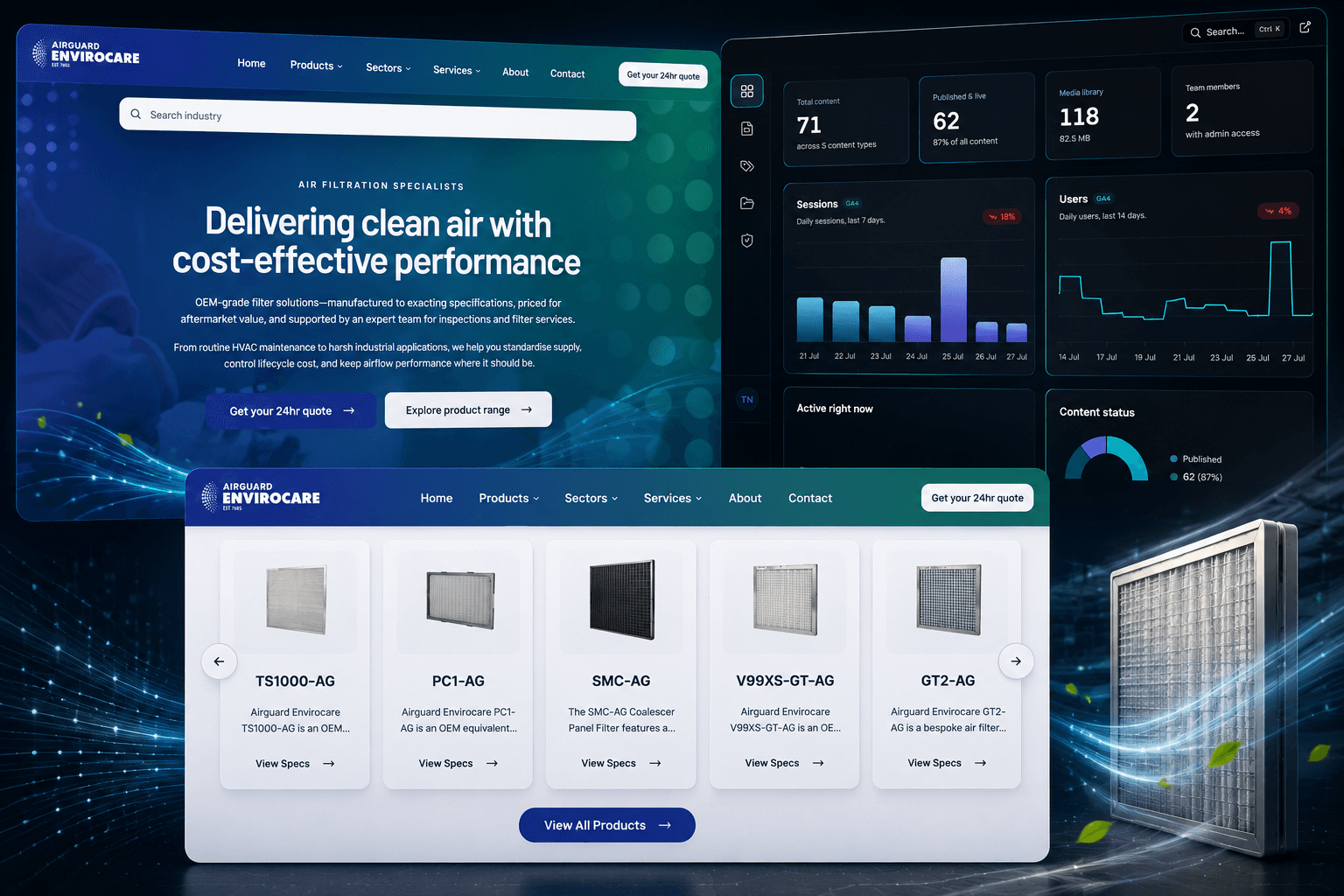
AirGuard Envirocare: Air Filtration Manufacturer
Corporate site for a UK air filtration manufacturer with a full product catalog, sector pages, and a built in dashboard for tracking content and traffic.

Furniture Marketplace
Furniture marketplace on Sanity CMS with Stripe payments, server-verified pricing, idempotent webhooks and query-level filtering for a large catalogue.

Nike Store App
Ecommerce storefront with server-rendered product pages for SEO, client-side cart and auth, and Stripe checkout sessions created on the server.
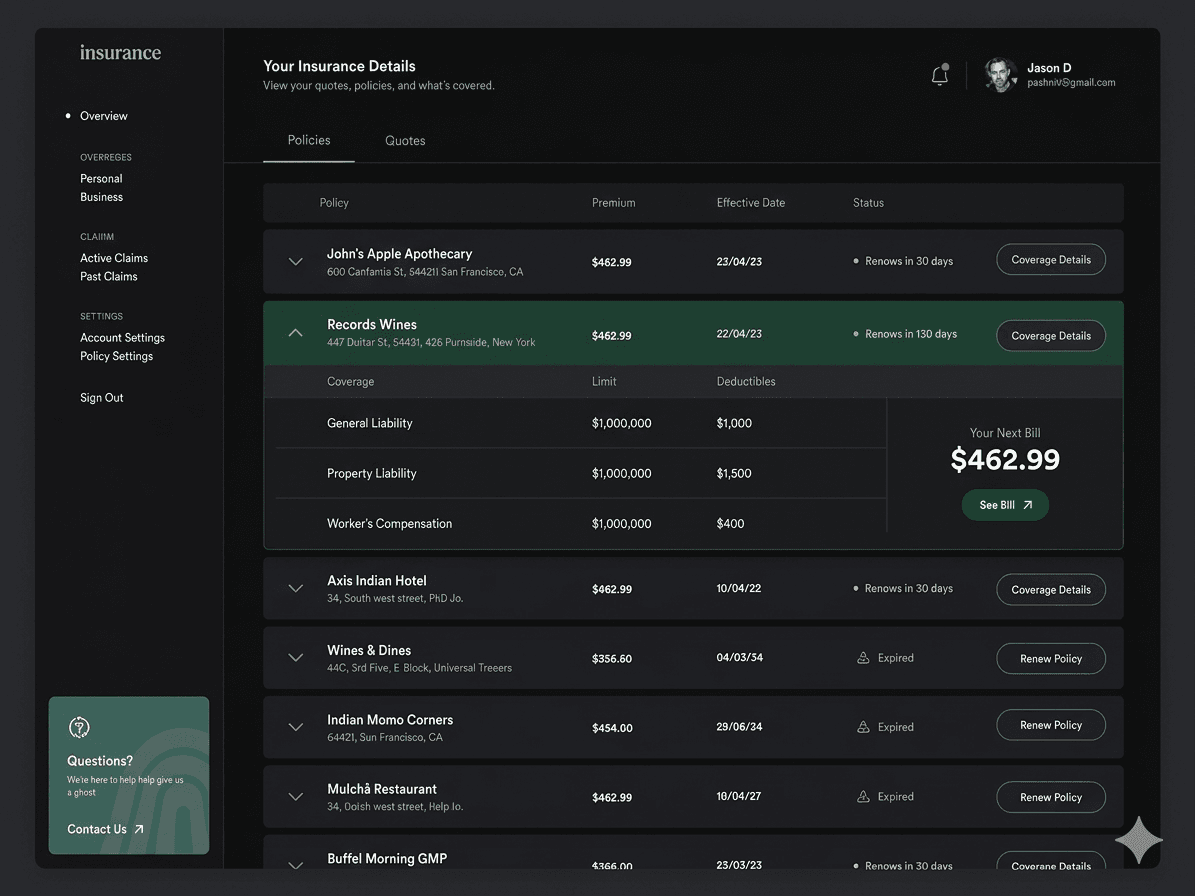
Client Portal
Secure client portal for project tracking, communication and deliverables, with access control enforced at the data layer rather than in the interface.

Meetech Development
Website for Meetech Labs, a technology company working in AI automation and web development, built design-system first on typed, documented components.
Questions about next.js development
- Do you work on existing Next.js codebases or only new builds?
- Both. A large share of the work here is an addition to something already running rather than a rewrite. The first step on existing code is reading it and telling you honestly what shape it is in before proposing anything.
- Can you migrate a React app to Next.js?
- Yes, and normally incrementally rather than as a single rewrite. Routes move across one at a time so the application keeps shipping throughout, which is both lower risk and easier to review.
- Why is my Next.js site not showing up in Google?
- The most common cause is content that only exists after hydration, such as text inside a dialog or a client-only component, so the server-rendered HTML a crawler reads is effectively empty. Missing canonicals and duplicate titles across routes are the next most common.
- Do you handle deployment and hosting?
- Yes. Vercel is the usual target for Next.js, but a plain Node host or container works too. Deployment, environment configuration and CI are part of the build rather than a separate phase.