Hire a Forward Deployed Engineer (FDE).
Forward deployed engineering is an engagement where one engineer works inside your team, your repository and your tooling, learns how the work is really done, then designs, builds and deploys the system in your own environment until it holds up against real users.
Most engineering engagements start with a specification somebody wrote before they understood the problem. The estimate is against that document, the build is against that document, and the gap between the document and the actual work only surfaces at handover, when it is expensive.
A forward deployed engagement removes that gap by removing the handover. I join your team, your repository and your tooling, sit with the people doing the work, and build against what I see rather than what was written down. Discovery, architecture, implementation and the iteration after launch are the same person's job.
It suits teams who know something is wrong with a workflow but cannot yet write the ticket for it, teams shipping their first AI feature into a product that already has users, and founders who need one senior pair of hands rather than a coordination overhead.
What the engagement covers
Embedded discovery
Time inside your tools and standups watching the workflow, not a requirements call. The brief is almost never the problem, and finding the real one is the highest-value week of the engagement.
Architecture you can defend
A written design for what gets built and, more importantly, why, including what was deliberately left out. Six months later that reasoning matters more than the code.
Implementation end to end
Front end, back end, data layer, integrations and deployment. No boundary where the work stops and somebody else's begins.
Deployment into your environment
Running on your infrastructure, in your CI, behind your auth, with logging and failure paths designed before launch rather than after the first incident.
Iteration after launch
The weeks after the demo, when real users find the paths nobody scoped. That is the part of the job that decides whether the system survives.
A documented handover
The system, the reasoning and the operational notes, written for whoever picks it up next, which is often your own team.
How it runs
Deploy in
Access to the repository, the tools and the people. I watch the workflow being done and write down what actually happens, including the parts nobody mentions because they are used to them.
Ship a narrow slice
One real path, working end to end in your environment, early. A working slice teaches more in a week than a specification teaches in a month, and it tells us both whether the plan is right.
Widen and harden
Automate the routine path, route the exceptions to a person, instrument every call, and close the failure modes the narrow slice exposed.
Hand over
Documentation, a walkthrough with whoever inherits it, and a written record of the decisions. The engagement ends; the reasoning stays.
Projects built this way
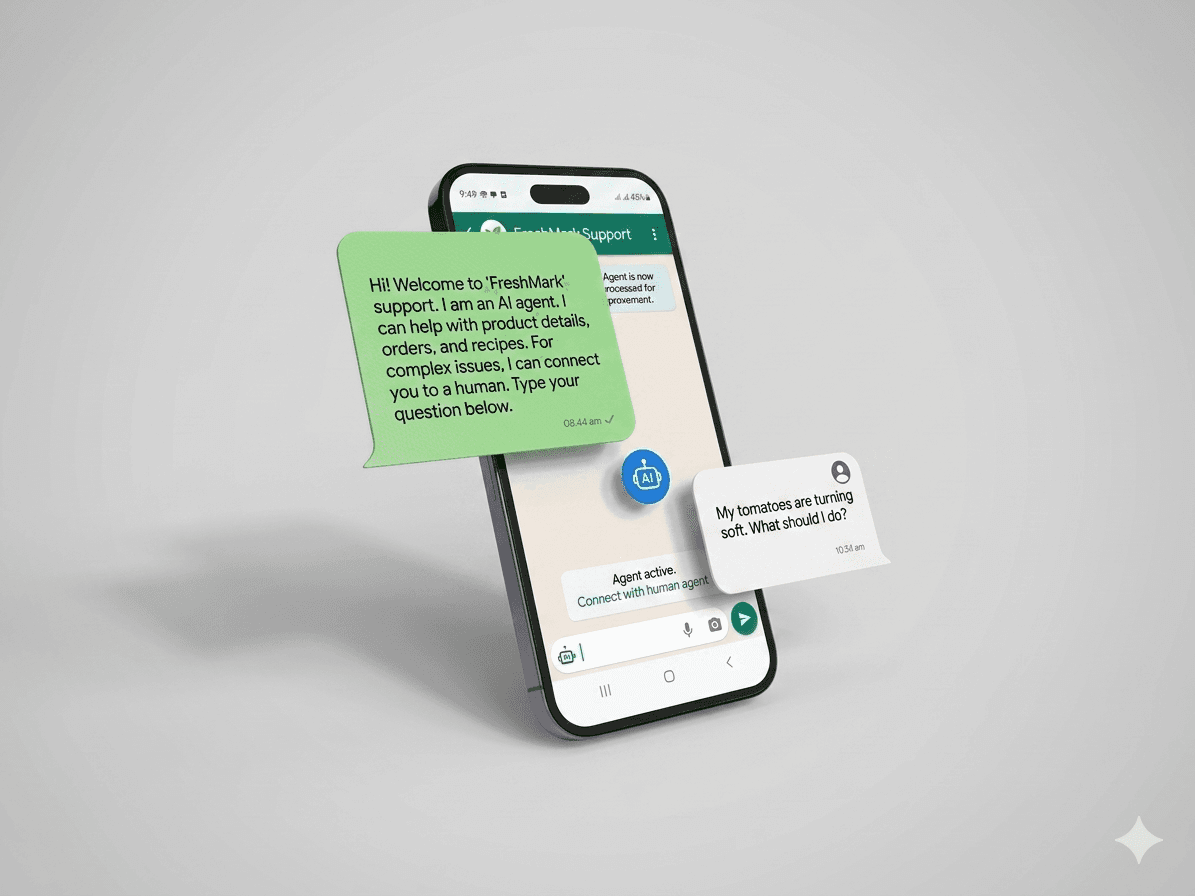
Customer Support AI
AI support automation with ticket routing, sentiment analysis and confidence-gated responses that escalate to a human instead of shipping a wrong answer.
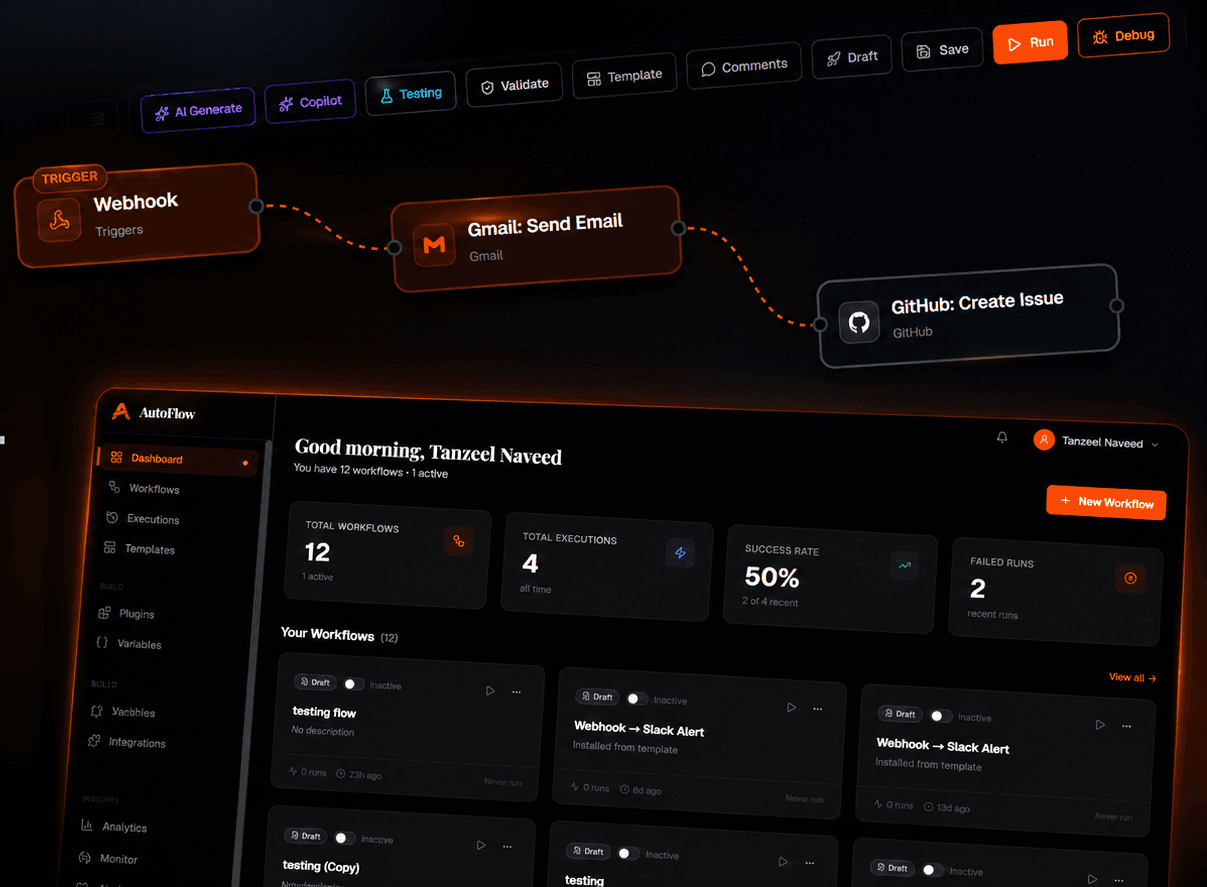
AutoFlow: AI Workflow Automation Platform
No-code workflow automation platform with a visual builder, AI assisted workflow generation, and a live dashboard for tracking executions and success rates.
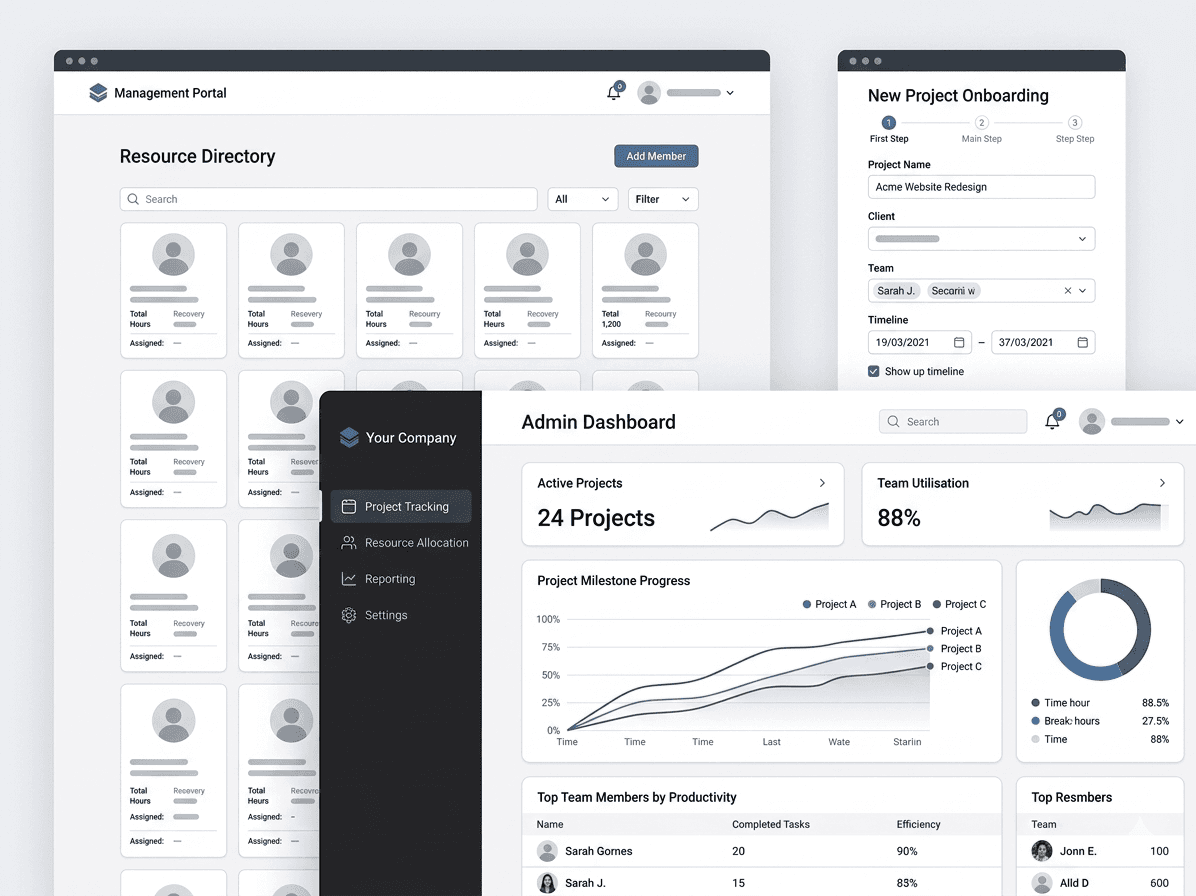
Internal Management System
Internal operations platform for team management, task workflows and resource planning, with permissions coming from one central policy layer per module.
Greyn
Climate-tech platform for ESG verification and impact measurement, storing every metric with its source, timestamp and verification status so reports stay traceable.
Questions about forward deployed engineering
- What is a Forward Deployed Engineer?
- A Forward Deployed Engineer embeds inside the customer's team rather than working behind a ticket queue. They learn the real workflow first hand, then design, build, deploy and iterate the system in the customer's own environment until it holds up against real users and real data.
- How is an FDE different from a contractor or an agency?
- A contractor builds to a specification you wrote. An FDE helps you find out what the specification should have been, because they are in the room while the problem happens. There is also no handoff: the person who understood the problem writes and deploys the code.
- Do you work inside our repository and tools?
- Yes. That is the point of the model. I work in your repository, your CI, your issue tracker and your chat for the length of the engagement, under whatever access policy your team requires.
- Can you work with our existing engineering team?
- Yes, and that is the common case. The usual shape is one embedded engineer alongside an in-house team, taking the workflow or AI problem nobody has bandwidth to own, and handing it back documented.