Cashbook AI
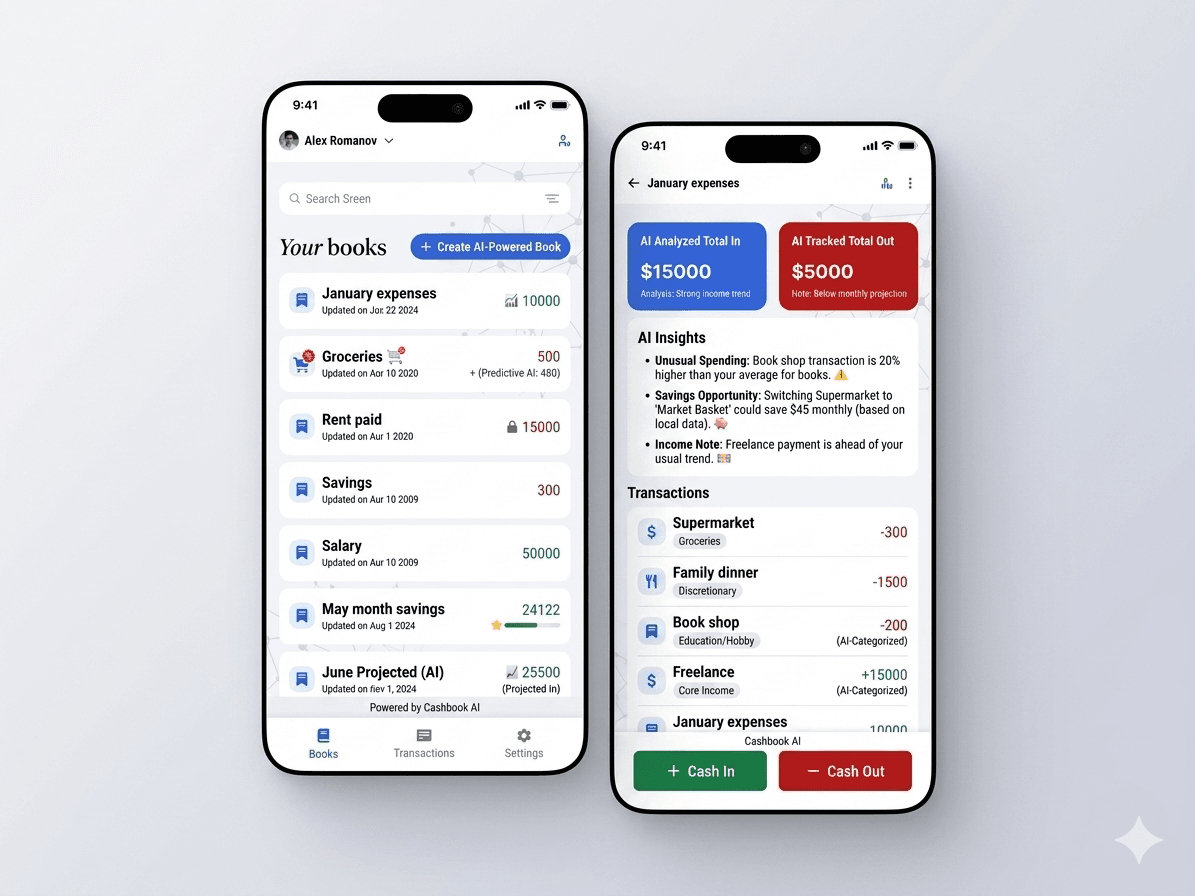
AI accounting app that categorises transactions automatically, tracks income and expenses, and generates reports, with every prediction open to user correction.
50K+
Transactions Processed
98%
Auto-Categorized
Real-time
Sync
01 // Overview
AI-Powered Accounting App
Cashbook AI is a next-generation accounting application that uses artificial intelligence to automate your bookkeeping. Simply connect your bank accounts or manually add transactions - the AI learns your spending patterns and automatically categorizes everything for effortless financial management.
AI Auto Categorization
Machine learning algorithms automatically sort transactions into categories - groceries, utilities, entertainment, income, and more without manual input.
Expense Tracking
Real-time monitoring of all income and expenses with detailed breakdowns, trends, and spending patterns across time periods.
Smart Financial Reports
Automated generation of profit & loss statements, cash flow reports, tax summaries, and custom financial insights.
02 // Features
AI Accounting Capabilities
Budget Planning
AI analyzes your spending habits and suggests personalized budgets with alerts when you're approaching limits.
Invoice Management
Create, send, and track invoices with automated reminders for overdue payments and payment status updates.
Tax Preparation
Automatic tax calculation, deductible expense identification, and ready-to-file tax reports for hassle-free filing.
Engineering
The Decisions Behind It.
What made this hard?
Automatic transaction categorization is worthless unless the user can correct a wrong call, and the system keeps that correction.
How was the system structured?
Categorization is a suggestion layer, not the final truth. The model's output is stored with its confidence, and the user override lives in a separate field, so the original prediction and the human correction are both preserved. Reports always derive from the final categorized state.
What does the codebase look like now?
Financial values are handled as integers so floating-point rounding errors never enter the ledger. The category taxonomy sits in configuration, letting a business map it to its own chart of accounts.